

• HOME
  • GETTING STARTED
    • Quick Start Guide
    • Evaluation Platform
    • Webinars 2026
    • Demo Videos
  • OUR PRODUCTS
    • All SimBio Modules
    • Textbook Replacements
      • SimBio Ecology
      • Intro Bio
    • Intro Bio
    • Ecology
    • Evolution
    • Cell Biology
    • Molecular Biology
  • DELIVERY SYSTEMS
  • PRICING & ORDERING
  • ABOUT
    • Overview
    • Employee Ownership
    • Research & Publications
    • Blog
    • Testimonials
    • Jobs
    • Accessibility
  • TECH SUPPORT
    • Support for Instructors
    • Support for Students

Mobile Menu

  • Menu
  • Skip to right header navigation
  • Skip to primary navigation
  • Skip to main content
  • Skip to primary sidebar
  • Skip to footer

SimBio logo

Simulated Biology. Real Learning.

  • Evaluation Platform
  • Contact
  • Blog
  • HOME
  • GETTING STARTED
    • Quick Start Guide
    • Evaluation Platform
    • Webinars 2026
    • Demo Videos
  • OUR PRODUCTS
    • All SimBio Modules
    • Textbook Replacements
      • SimBio Ecology
      • Intro Bio
    • Intro Bio
    • Ecology
    • Evolution
    • Cell Biology
    • Molecular Biology
  • DELIVERY SYSTEMS
  • PRICING & ORDERING
  • ABOUT
    • Overview
    • Employee Ownership
    • Research & Publications
    • Blog
    • Testimonials
    • Jobs
    • Accessibility
  • TECH SUPPORT
    • Support for Instructors
    • Support for Students

On Conflict and Collaboration

Home » All Things SimBio » On Conflict and Collaboration

October 15, 2026 //  by John Roach

John Roach

My early introduction to ecology was more accurately a romance, reflecting a young boy’s idyllic love of “Lions and Tigers and Bears! Oh My!” It was fostered by my grandparents, who took my family to tour Yellowstone and the Great Tetons when I was nine or ten, and further nurtured by my parents who gave me Barry Lopez’s Of Wolves and Men shortly thereafter. Lopez wrote beautifully, weaving the natural history of wolves with their varied representations in human culture. From the evil, cruel wolf of Little Red Riding Hood to the sacred “Brother” of many Native American stories, Lopez managed to illustrate the disparate roles wolves play in our collective mythology.

Those early experiences and perspectives were with me when I volunteered on a project studying coyotes in Yellowstone shortly after graduating from college. At this time, a year or so before wolves were reintroduced to the park, coyotes roamed in large packs capable of hunting and killing elk. Of course, their success depended on deep snow cover and relentless teamwork. They were not swift, however. Instead, they were like a cat playing with a mouse, pestering their quarry to the point of exhaustion. This wasn’t cruelty. It was simply the only tactic available to relatively small dogs trying to take down a large ungulate. Still, it very much reflected Tennyson’s famous line: “Nature, red in tooth and claw.”

Wolves now roam the park, and interactions between predators and prey look somewhat different. The large coyote packs are gone, having been efficiently dispersed by the larger, more aggressive wolves. Still, Yellowstone is a place where interspecies conflicts remain on display. Visitors can once again watch wolves work together to subdue a bull elk only to be driven off by an aggressive grizzly. And such encounters are memorable. Early naturalists from Darwin to Audubon wrote extensively about the predators they saw. Given the engrossing nature of these accounts, it’s easy to see why so many ecologists have been curious about the role conflict plays in driving community dynamics (see SimBio’s Exploitative Interactions chapter). Indeed, my master’s research was a variation on the theme. I asked how predation risk altered pika foraging behavior and whether the resulting landscape of fear altered the plant community of the Beartooth Plateau. I enjoyed the work immensely in part because it felt like a return to my childhood. Studying pikas let me investigate some of the questions about the predators that had initially drawn me to ecology. And even if I couldn’t claim to be studying lions or tigers or bears directly, I did feel I had come full circle.

Of course, even then I knew that not all species interactions are adversarial. I knew that a lichen wasn’t a single organism but rather a symbiotic relationship between algae and fungi, one that benefited both species. But at that time, I was less interested in this fascinating mutualism and more interested in lichen’s role as reindeer food. In the years since, I have trained as a biogeochemist, which has changed my thinking. After all, nobody who studies the nitrogen cycle fails to develop a keen appreciation for mutualisms between nitrogen-fixing bacteria and legumes. Still, even after getting my doctorate, I’m not sure I realized how important mutualisms truly are. Certainly, I didn’t recognize that only 8% of land plants are complexly nonmycorrhizal. That only happened this year when I started more thoroughly researching mutualisms in anticipation of writing our new chapter, Species Interactions and Coevolution.

I have been lucky enough to spend more than 15 years writing interactive ecology chapters for SimBio. I’m lucky because each project has taught me something. To recall just one example, writing our chapter on Climate Change gave me a keen appreciation for how clever paleoclimatologists are. Whether they are looking at changes in isotopic ratios of hydrogen and oxygen trapped deep in ice cores, measuring the tree rings in the timbers used to build old cabins, or looking at changes in the frustules buried in sea sediments, these scientists have come up with some ingenious ways to peer back in time. That said, writing Species Interactions and Coevolution may have done more to broaden my ecological thinking than any other chapter I have worked on. This is because it forced me to take the time to collect stories about the myriad ways that mutualisms and other positive interactions—I’m looking at you, commensalisms!—affect ecological systems. Some of these stories, like that of honey hunters and honeyguides, were completely new to me, while others, like the relationship between plants and their pollinators, were not. However, the breadth of positive relationships—not to mention the sheer number of them—caught me by surprise. What’s more, the sum total of their impact on ecosystem structure and function was a revelation.

One of the reasons I like writing about ecology is because I get to share my excitement about the subject. I remain endlessly fascinated, both about how the natural world works and by the process of science. I hope that my enthusiasm for the subject is apparent in my work and that it has helped inspire some of the many students that have been forced to read it. But another joy is that it has afforded me the opportunity to read broadly and continue to learn. And rarely have I learned so much— nor had so much fun discovering what I didn’t know— than when researching Species Interactions and Coevolution. I hope you all enjoy the results as much as I do.
Author

  • Dr. John Roach
    John Roach

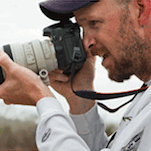
    Dr. John Roach is lead author and architect of Climate Change and several other SimUText Ecology® chapters and tutorial labs. He also periodically teaches Ecology at the University of Montana and has a wicked good slap-shot!

    View all posts

Category: Biology Education, Teachable MomentsTag: Active Learning, Climate Change, Ecology

Related Posts

Eli Meir

Ruling the Rock

Eli Meir

Harnessing Bad AI for Good Teaching

John Roach

SimBio Ecology – Comprehensive ecology education

Jaz Donkoh

In-class learning or homework?

John Roach

Risk, Insurance, & Climate Policy

John Roach

The hidden benefits of Ecology courses

Eli Meir

Study Confirms the Importance of Feedback

John Roach

Climate Change & Disease

John Roach

Icky Stories as Teachable Moments

Jaz Donkoh

Highlights from SABER

John Roach

Urban Ecology – Beyond Rock & Ice

John Roach

Tackling Climate Change

Previous Post: «Eli Meir Ruling the Rock

Footer

Testimonials

“[SimBio’s modules] provide a powerful environment for hands-on, active learning in Ecology and Evolution. The depth, design, and pedagogical effectiveness of these packages is unequaled. They have greatly enriched student interest and understanding in all of my courses, from Introductory Biology to Advanced Population Biology”

— Dr. Brad Lister
Rensselaer Polytechnic Institute

“The lab simulations have been very helpful to reinforce the lecture content and encourage students to use critical thinking skills to solve problems.”

— Patti Fallest-Strobl
Neumann University

“I was amazed how quickly and effortlessly the simulation taught them a dynamic system.”

— Paula Philbrick
University of Connecticut

“The students like [it] so much that they are working ahead of what I have assigned. They just think it’s fun. And from the quiz results I have so far, they’re really getting it. You guys are geniuses.”

— Paulette Bierzychudek
Lewis & Clark College

“Since we began using Simbio’s Ecology chapters our students consistently come to class better prepared. This is a key to the success of our hybrid flipped classroom approach.”

— Dr. Peter Curtis
Ohio State University

“That was the most fun I’ve had teaching ecology and, I would venture to guess, the most fun my students have had taking ecology from me.”

— Matt Orr
Oregon State University, Cascades

“Our students are more prepared and our class discussions are more sophisticated because SimUText is such a great out of class “instructor”. Since our students have SimUText preparation we can spend class time applying concepts and evaluating new information.”

— Emily Bernhardt
Duke University

“I LOVE that every lab is based on a real study. I LOVE that all of the labs offer an open-ended inquiry. I LOVE that the labs gradually teach the concepts and build up a repertoire of data collection techniques. Thank you, for creating them.”

— Jeanette Williams
Community College of Vermont

“I just wanted to say how great simutext has been. I could have memorized facts about the electron transport chain and passed the test, but would not have had any solid concept of what was happening inside. I hope that we continue to use it often even when things return to normal.”

— Student
Rochester Community and Technical College

“Congratulations for developing such a high quality chapter. I was very impressed by its comprehensiveness, accuracy, and thoughtful design. It really is superb.”

— Richard Boone
Humboldt State University

“I recommend your modules to anyone I can, because of all the online materials I’ve found, SimBio is really the best in content and best managed. I am definitely a SimBio fan!”

— Valerie Anderson
Marymount California University

All Things SimBio

  • John RoachOn Conflict and Collaboration
    By John Roach
    October 15, 2026
  • Eli MeirRuling the Rock
    By Eli Meir
    July 1, 2026
  • Eli MeirHarnessing Bad AI for Good Teaching
    By Eli Meir
    June 16, 2026
More Blog Posts →

Contact

Shipping: 1280 S. Third St W., Missoula, MT 59801
Billing: P.O. Box 7158, Missoula, MT 59807
Phone: (833) 314-7701
Fax: (617) 279-0055
Questions?

SimBio Order Form
Privacy Policy
VPAT / Accessibility Statement

Site Footer

  • Facebook

Copyright © 2026 SimBio. All Rights Reserved. Trademarks.